
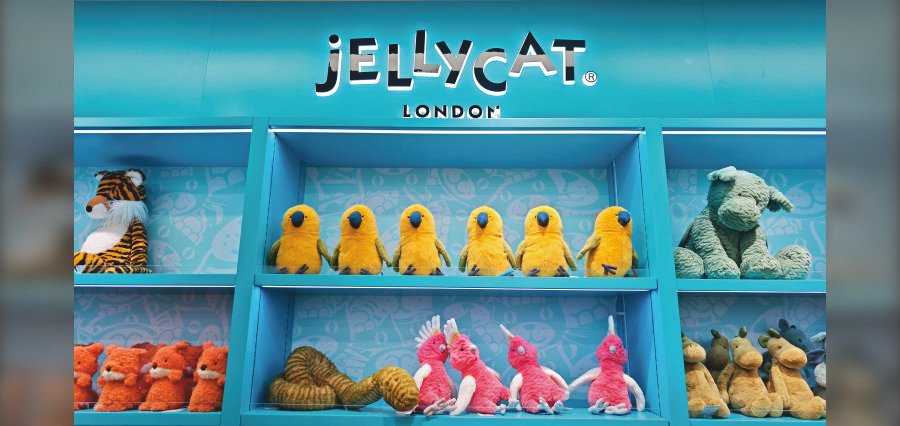
Prime Highlights:
- Jellycat’s playful “Amuseable” plush toys have become a hit in China, offering comfort and joy to Gen-Z and millennial collectors.
- The brand’s revenue rose two-thirds to £333m ($459m) in 2024, with around $117m in sales to Chinese consumers.
Key Facts:
- Jellycat entered China in 2015 and grew in popularity through pop-up stores, limited-edition releases, and toys adapted to local tastes like teapots and teacups.
- Collectible toys in China are expected to surpass 110bn yuan in sales this year, fueled by young adults seeking emotional comfort and affordable “light-hearted luxury.”
Background:
When Stella Huang lost her job during the pandemic, she turned to Jellycat, a British plush toy brand, for comfort. She purchased her first toy, a gingerbread house plushie, through a friend in Guangzhou after seeing it on the Chinese social media platform RedNote.
“I always liked the sight of gingerbread houses, even though Christmas isn’t widely celebrated here,” says Stella, now 32, who has grown her collection to 120 Jellycat toys, totaling about 36,000 yuan ($5,145). “The plushies help me regulate my emotions.”
Originally designed for children, Jellycat’s squishy toys have captured a global adult audience. Its Amuseable line, featuring small faces on inanimate objects like toilet rolls, boiled eggs, and aubergines, has proven especially popular among young Chinese consumers. Many fans even create memes around the aubergine plushie, nicknamed the “boss,” reflecting adult frustrations humorously on social media.
Jellycat came to China in 2015 and slowly grew its presence. During the pandemic, people turned to the brand for comfort. Pop-up stores and special events with limited-edition toys helped make it popular. Jellycat also made toys for local tastes, like teapot and teacup plushies in Beijing and Shanghai.
The strategy has paid off. In 2024, Jellycat’s revenue rose two-thirds to £333m ($459m), with around $117m in sales to Chinese consumers. Analysts say the growing popularity mirrors a wider boom in China’s collectible toy market, which is projected to exceed 110bn yuan this year.
Many young people in China collect Jellycat toys as an affordable way to enjoy a little luxury. Fans look for rare toys overseas, and limited editions make collecting exciting.
Even with alternatives like blind-box toys, Jellycat’s cute designs and comforting appeal have made it very popular among young Chinese.
Read Also: Nvidia Unveils Rubin Arcithetcure, Its Most Powerful AI Computing Platform Yet